
Metropolitan Bishop of Tbilisi Participates in High‑Level Conference at the UK Parliament and Signes a Declaration
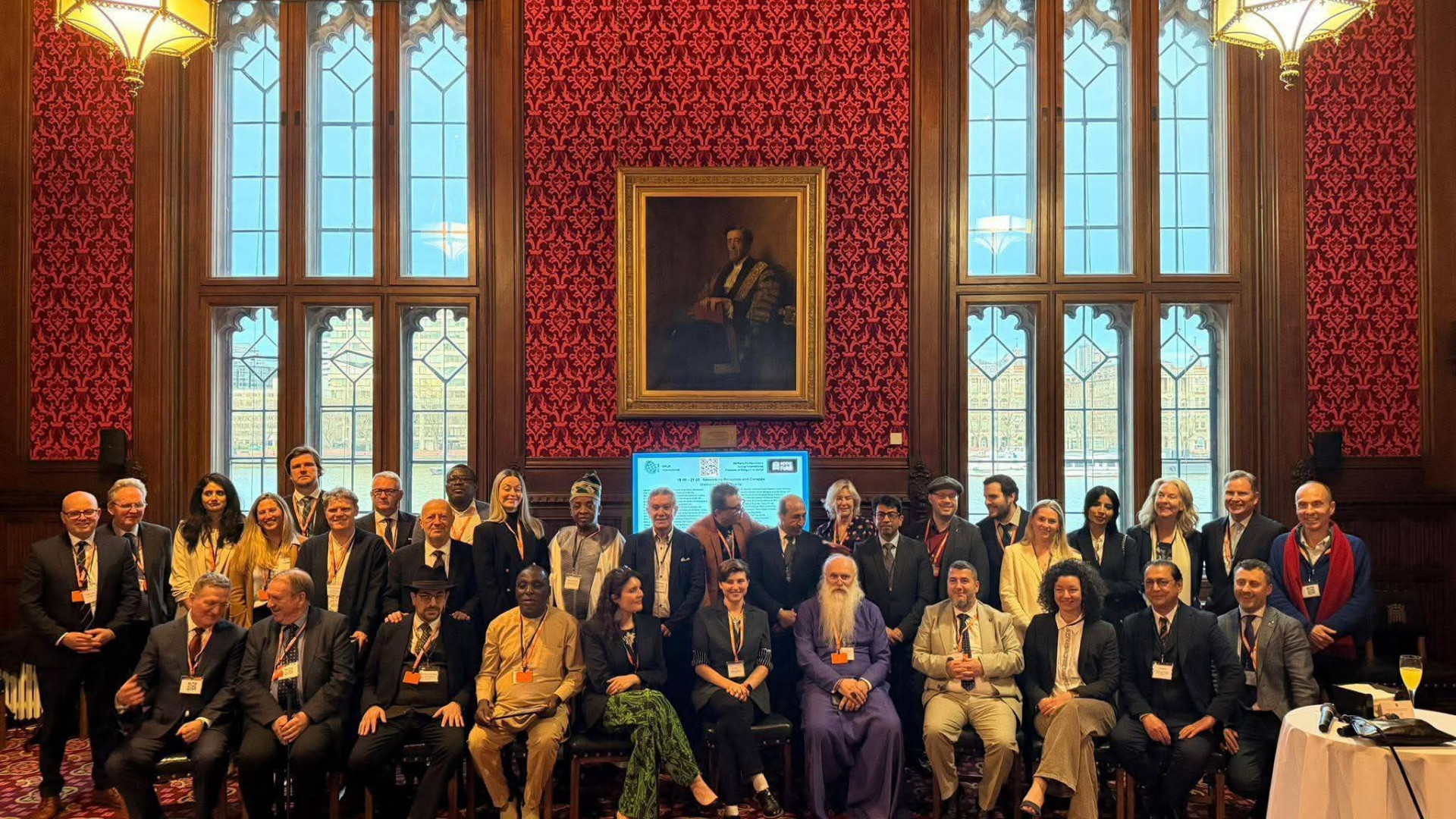
On 26 March 2026, Metropolitan Bishop of Tbilisi, Dr Malkhaz Songulashvili, attended a High‑Level international conference in the House of Commons, London. Convened by BPUR, the event addressed a persistent and destabilising driver of global conflict under the title: “Global Rules to Ban the Political Abuse of Religion – International Partnership to Address the Root Causes of Religious Conflicts.” The conference was held in the historic Churchill Room at the Palace of Westminster.
Sponsored by BPUR International’s stakeholder, the UK All‑Party Parliamentary Group for International Freedom of Religion or Belief (APPG FoRB), the meeting brought together senior officials, parliamentarians, religious leaders, philanthropists and distinguished dignitaries from across the world.
Keynote speakers included Jim Shannon MP, Chair of APPG FoRB; Amina Bouayach, President of the National Human Rights Council of Morocco; global investor and philanthropist Naguib Sawiris; Dr Stephen Schneck, Commissioner at the U.S. Commission on International Religious Freedom; and Sir Dr Liam Fox, Chair of the Abraham Accords Prosperity Group and former UK Defence Secretary.
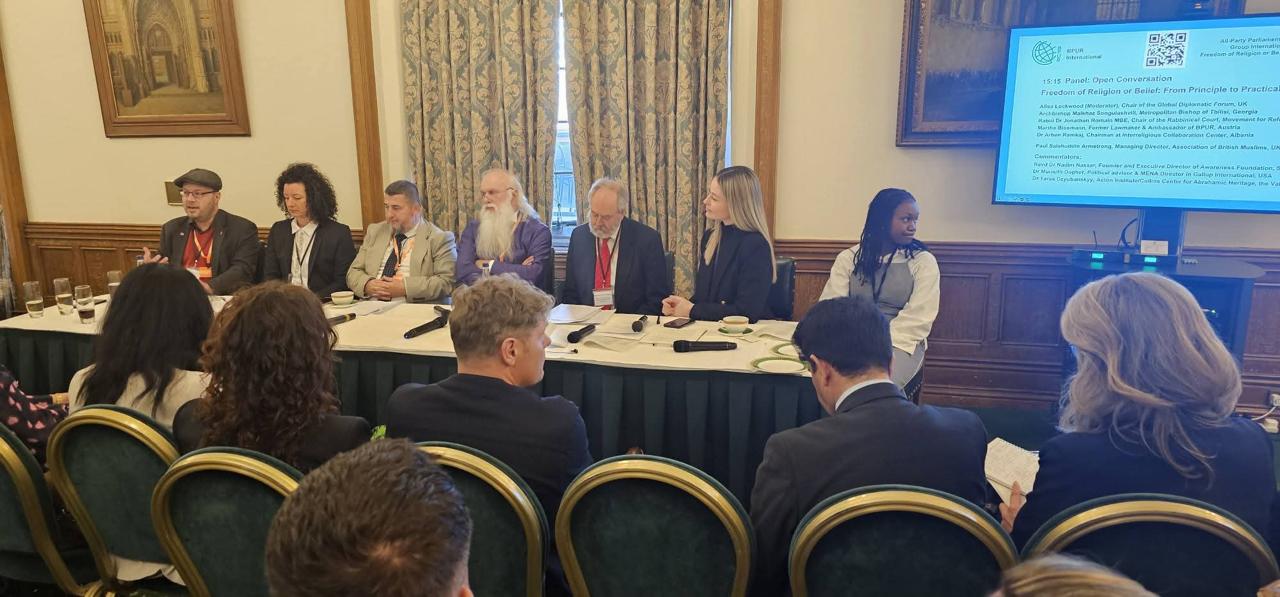
Dr Malkhaz Songulashvili spoke on a panel alongside Rabbi Jonathan Romain and other religious and political leaders from the United Kingdom, Albania and Austria. Reflecting on the event, Dr Songulashvili described it as “fruitful, engaging and promising.”
The conference adopted the Westminster Declaration on Preventing the Political Abuse of Religion, which states:
„We, the officials, parliamentarians and representatives of governments, civil society, religious institutions and international organisations gathered at the House of Commons,
Reaffirm that freedom of religion or belief is firmly recognised in international law, notably under Article 18 of the Universal Declaration of Human Rights, and remains an essential pillar of human dignity, equality and peaceful coexistence.
Recognise that religion and belief are deeply rooted in the identity and moral fabric of societies, and that their protection and integrity are a shared responsibility of governments and communities alike.
Acknowledge that, in certain contexts, the political exploitation of religion has contributed to discrimination, exclusion, instability and conflict, undermining equal human rights and weakening social cohesion.
Observe that while existing international norms establish important principles, they often remain broad and aspirational, lacking clearly defined preventive standards, safeguards and effective remedies. As a result, victims face limited avenues for redress, and governments may lack clear guidance. These gaps contribute to persistent inequality and many contemporary conflicts.